
Sigillography
This week’s seed was sigillography, the study of seals: the stamped lumps of wax that kings, monks, merchants, and the occasional forger pressed onto documents to say “this is really from me, and nobody has opened it.” A seal works as a signature and a tamper-evident lock at the same time. Historians date and authenticate medieval charters by the seal alone, matching the impression against known matrices the way a modern fingerprint examiner would. It’s authentication without math, and once the wax cracks you can’t undo it.
The cart got the Yoption Bee Wax Seal Stamp Kit ($13.58): a brass bee stamp on a detachable wooden handle, three sticks of sealing wax (gold, silver, red), a little melting spoon, two tea candles, and a gift box made to look like an old book. The process is pleasingly hands-on. You shave off some wax, melt it in the spoon over the candle, pour a puddle, press the stamp, wait, and lift. The bee was a deliberate pick over castles and monograms. Bees were a real heraldic and seal motif (Napoleon adopted them as his imperial emblem), and a bee is also cute enough for a seven-year-old to want to put on everything.
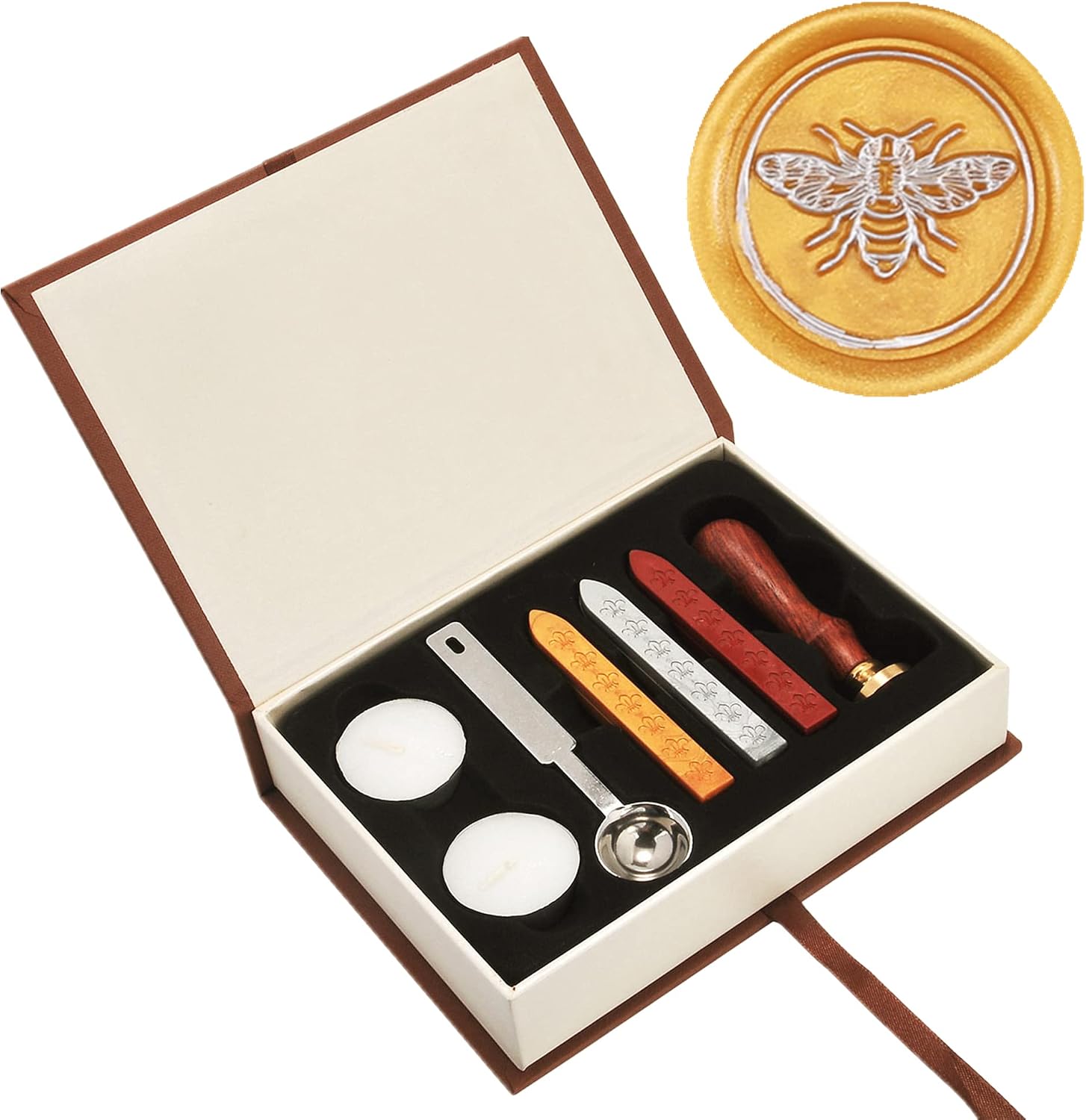 Medieval tamper-evident packaging, now with candles.
Aurora writes a lot of letters and notes, and every one of them is about to arrive sealed with a bee. Candles and molten wax mean adult supervision, which is fine, because the adults will want a turn too. Tracy can seal holiday cards. Jón gets to point out that this is basically a physical digital signature with no key rotation, and gets ignored. Kátur should stay well away from the hot wax. It arrives tomorrow. Prediction: by Sunday there will be wax on at least one thing that is not an envelope.